
Call Us+91 82090 86201
WhatsApp+91 82090 86201
Your complete guide to Jaipur's best attractions — from iconic forts to hidden gems.
Jaipur, the Pink City of India, is one of the most vibrant and historically rich cities you'll ever visit. As the capital of Rajasthan and part of the famous Golden Triangle circuit, Jaipur attracts millions of visitors every year with its stunning forts, opulent palaces, colorful bazaars, and warm hospitality. Whether you're a first-time visitor or returning for another experience, these are the 10 places you absolutely cannot miss.
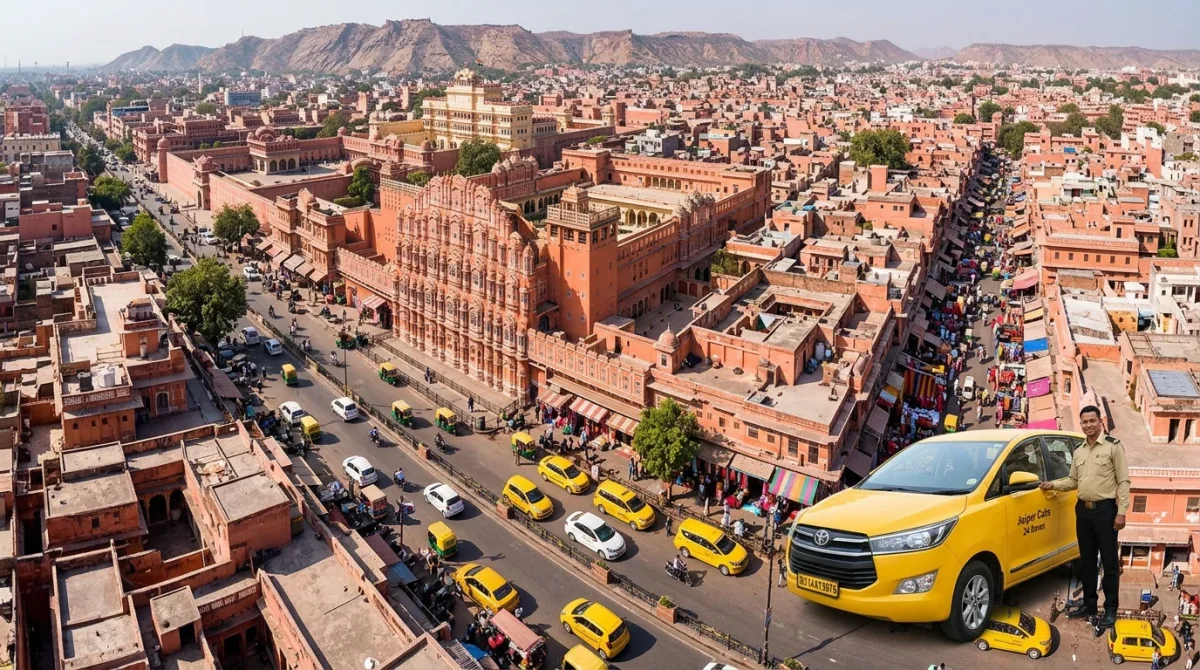
The crown jewel of Jaipur tourism, Amber Fort is a magnificent 16th-century hilltop fortress overlooking Maota Lake. Built by Raja Man Singh I, the fort is a masterpiece of Hindu-Rajput architecture featuring the dazzling Sheesh Mahal (Hall of Mirrors), Ganesh Pol gateway with its intricate frescoes, Diwan-i-Aam (Hall of Public Audience), and the private apartments of the queens. The light and sound show in the evening is spectacular. Allow 2-3 hours for a thorough visit.
Best time to visit: Early morning (8-9 AM) to avoid crowds. Entry fee: ₹200 for Indians, ₹550 for foreigners.
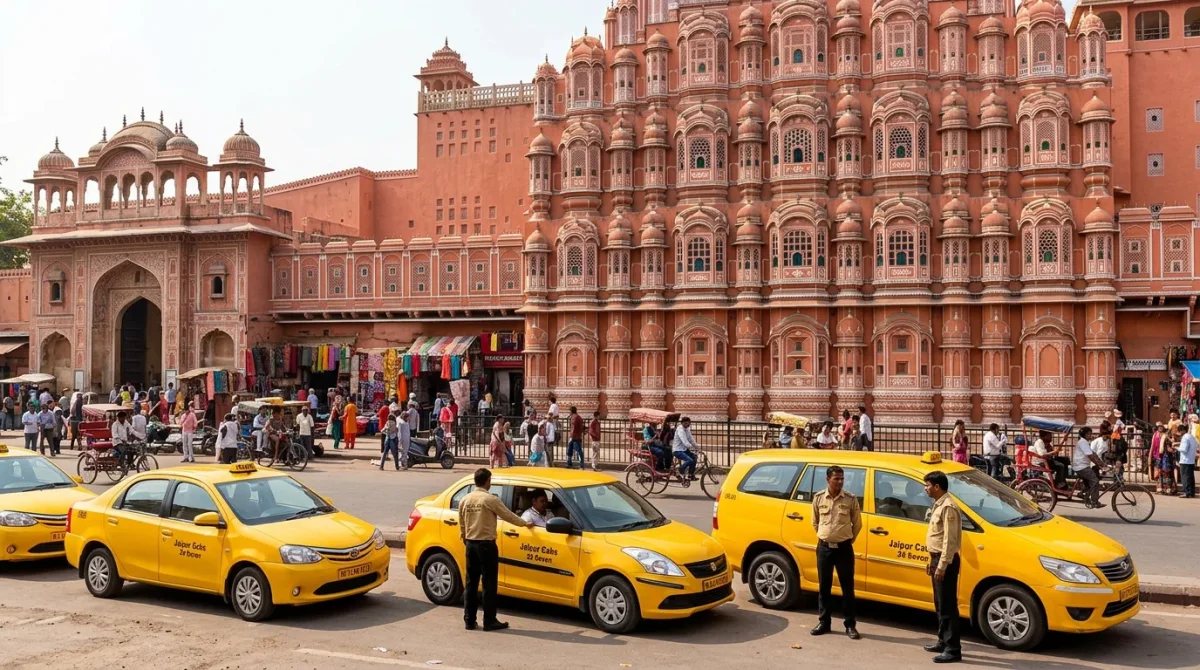
Jaipur's most iconic landmark, Hawa Mahal was built in 1799 by Maharaja Sawai Pratap Singh in the form of Lord Krishna's crown. Its unique five-story facade features 953 small windows (jharokhas) designed to allow royal women to observe street life without being seen. The honeycomb structure also functions as a natural air conditioning system, with the breeze flowing through the latticed windows even on the hottest days. The best photographs are taken from the cafe across the street in the morning light.
Still the residence of the royal family of Jaipur, City Palace is a magnificent complex blending Rajasthani and Mughal architecture. The Mubarak Mahal (Welcome Palace) houses the textile museum with royal costumes, while the Armoury Gallery displays swords, daggers, and firearms of the Rajput era. The highlight is the pair of enormous sterling silver urns in the Diwan-i-Khas — the world's largest silver objects, used by Maharaja Madho Singh II to carry Ganges water to England.
A UNESCO World Heritage Site, this 18th-century astronomical observatory contains 19 architectural instruments including the world's largest stone sundial (Samrat Yantra), which measures time to an accuracy of two seconds. Built by Maharaja Sawai Jai Singh II — himself an accomplished astronomer — Jantar Mantar demonstrates that Indian scientific achievement was centuries ahead of its time. Hire a guide at the entrance to understand how each instrument works — it transforms the experience.
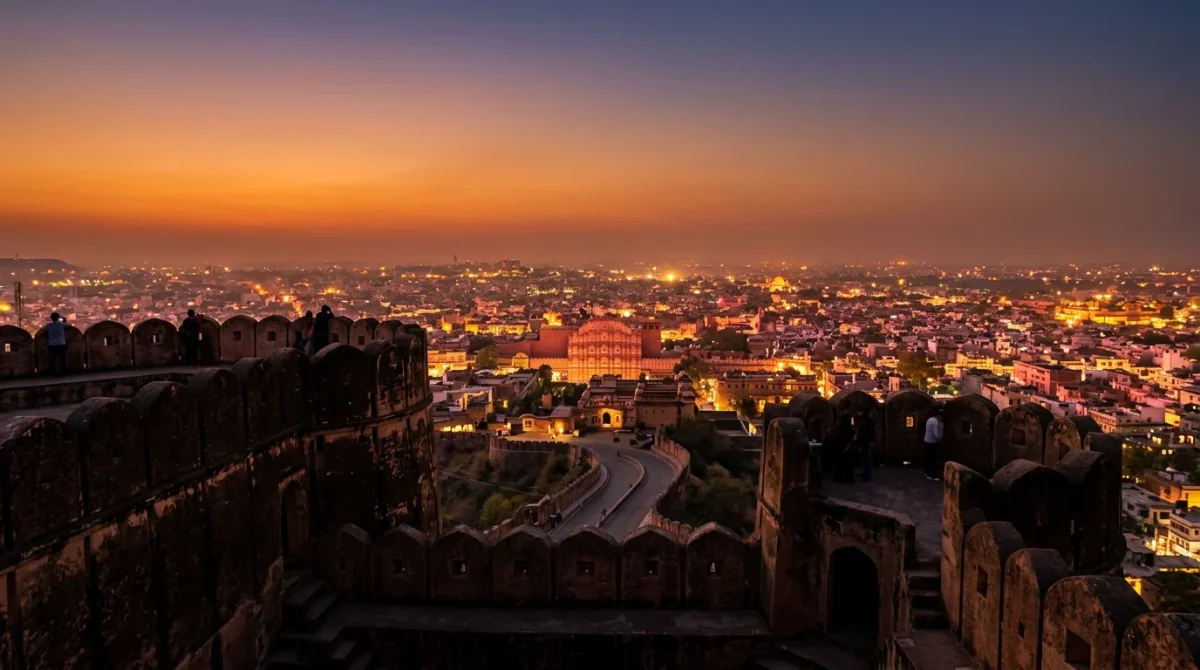
Perched on the Aravalli hills overlooking Jaipur, Nahargarh Fort offers the most spectacular panoramic views of the entire city — especially at sunset when the pink buildings glow golden in the evening light. The Madhavendra Bhawan inside the fort has beautifully painted suites connected by corridors. The rooftop restaurant Padao serves food and drinks with stunning views. This is Jaipur's favorite sunset spot — arrive 30 minutes before sunset for the best experience.
This ethereal palace appears to float in the middle of Man Sagar Lake, its Rajput architecture reflected perfectly in the calm water. While visitors cannot enter the palace itself, the lakeside promenade offers stunning photo opportunities, especially in the evening when the palace is illuminated. The causeway has been beautifully developed with landscaped gardens, making it a pleasant 30-minute stop during your sightseeing.
Rajasthan's oldest museum, housed in a stunning Indo-Saracenic building in Ram Niwas Garden. The collection includes Egyptian mummies, decorative arts, paintings, carpets, ivory carvings, and crystal works. The building itself — designed by Samuel Swinton Jacob in 1876 — is as impressive as the collection, with its ornate facade illuminated beautifully at night. Entry fee is just ₹40 for Indians.
A stunning white marble temple dedicated to Lord Vishnu and Goddess Lakshmi, built by the Birla family in 1988. The temple is particularly beautiful when illuminated at night against the dark sky. The three domes represent three major religions, and the stained glass windows depict scenes from Hindu mythology. Free entry, open to all.
Tucked into a narrow gorge in the Aravalli hills on the eastern edge of Jaipur, this ancient pilgrimage site features natural spring water flowing through seven sacred kunds (pools). The resident monkey population gives the temple its popular nickname. The architecture is atmospheric and authentic — far from the tourist crowds of the city center. Visit early morning for the best experience.
No Jaipur visit is complete without exploring its legendary markets. Johari Bazaar for gems and kundan jewelry, Bapu Bazaar for textiles, block-printed fabrics, and souvenirs, Tripolia Bazaar for brassware and lacquer bangles, and Nehru Bazaar for juttis (traditional footwear). The energy, colors, and sounds of these bazaars are quintessentially Jaipur. Visit in the late afternoon when the heat subsides and the bazaars come alive.
The most comfortable and efficient way to visit all these attractions is with a private sightseeing taxi. Our full-day sightseeing package covers all 10 locations with an experienced driver who knows the best routes, parking spots, and entry timings. Book your Jaipur sightseeing taxi here.
Book a comfortable sightseeing taxi and discover every corner of the Pink City.
Trusted by Leading Organizations & Valued Clients