
Call Us+91 82090 86201
WhatsApp+91 82090 86201
India's largest fort — Vijay Stambha, Padmini Palace & centuries of Rajput valor. 310 km from Jaipur.
Chittorgarh Fort is the largest fort in India and one of the most historically significant and emotionally powerful sites in all of Rajasthan. Spread over 700 acres on a massive rocky plateau rising 180 meters above the plains, the fort was the capital of the Mewar kingdom for over 800 years and the site of three of the most legendary episodes of Rajput defiance and sacrifice in Indian history. Walking through its ruins today — past towering victory towers, crumbling palace walls, ancient temples, and the sacred Gaumukh Reservoir — is to walk through centuries of extraordinary human courage and tragedy.
A UNESCO World Heritage Site, Chittorgarh Fort is located 310 km from Jaipur (approximately 4.5 hours drive via NH-48 and NH-58). It can be done as an ambitious day trip from Jaipur, but an overnight stay in Chittorgarh town (or continuing to Udaipur, just 112 km further) is recommended to appreciate the fort fully without rushing.
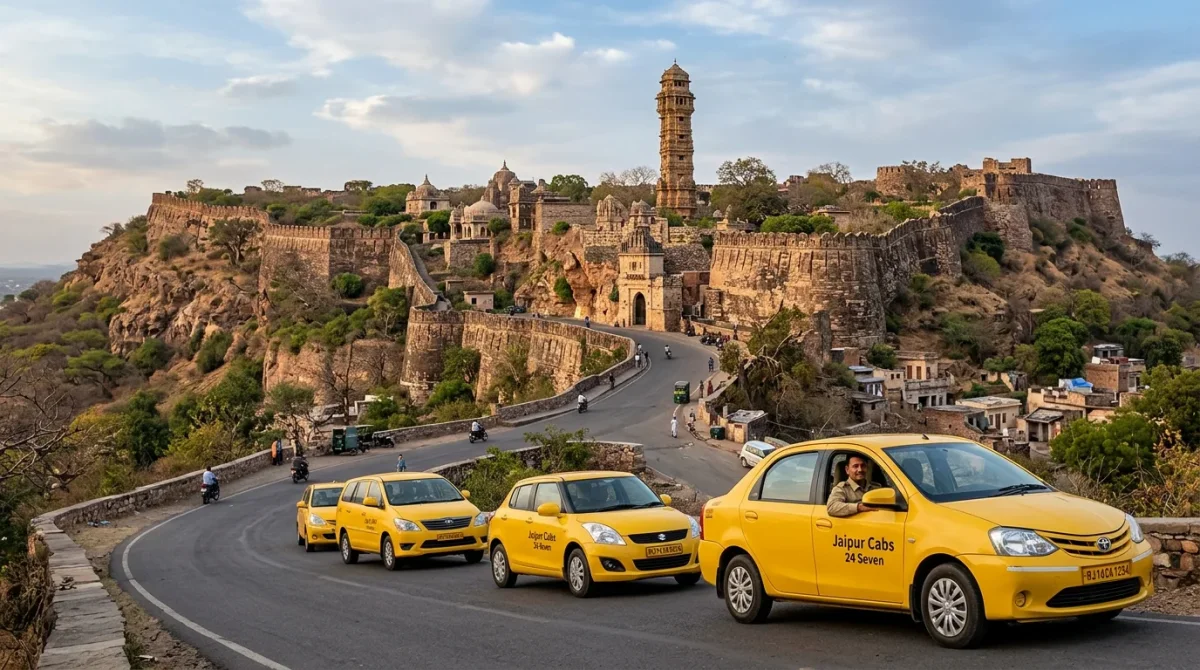
Chittorgarh witnessed three jauhars (mass self-immolation by women) and three sakas (suicidal last battles by men) — all performed to preserve honor in the face of inevitable defeat. The first jauhar in 1303 saw Rani Padmini lead thousands of Rajput women into the flames while the men rode out in their final battle against Alauddin Khilji's overwhelming forces. The second in 1535 was against Bahadur Shah of Gujarat. The third and final jauhar in 1568 was against Emperor Akbar's forces — after which Maharana Udai Singh II retreated and founded the new capital of Udaipur. These sacrifices are not merely historical events; they are living legends that define Rajput identity and continue to inspire reverence centuries later.
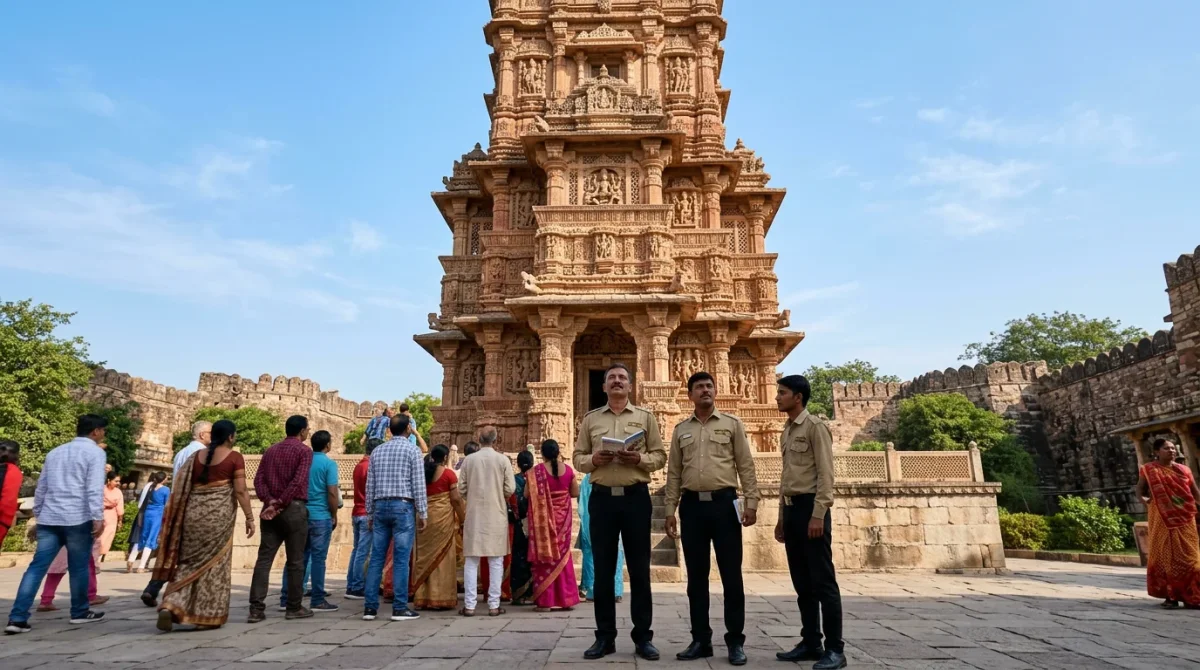
The Vijay Stambha (Victory Tower) is Chittorgarh's most iconic structure and one of the finest examples of medieval Rajput architecture in India. Built by Maharana Kumbha between 1440 and 1448 to commemorate his victory over the combined forces of Malwa and Gujarat, this 37-meter nine-story tower is covered inside and out with intricate sculptures depicting Hindu deities, celestial beings, and scenes from the Ramayana and Mahabharata. Climbing the narrow internal staircase to the top rewards visitors with a panoramic view over the entire fort plateau and the plains below. The tower is particularly beautiful at dusk when its warm sandstone glows golden in the evening light.
The older of Chittorgarh's two towers, the Kirti Stambha (Tower of Fame) dates from the 12th century and is a Jain monument built by a wealthy merchant. Though smaller than the Vijay Stambha at 22 meters, it is similarly covered in beautifully carved Jain figures and is architecturally elegant. It stands near the Fateh Prakash Palace museum, which houses an excellent collection of fort artifacts and ancient sculptures.
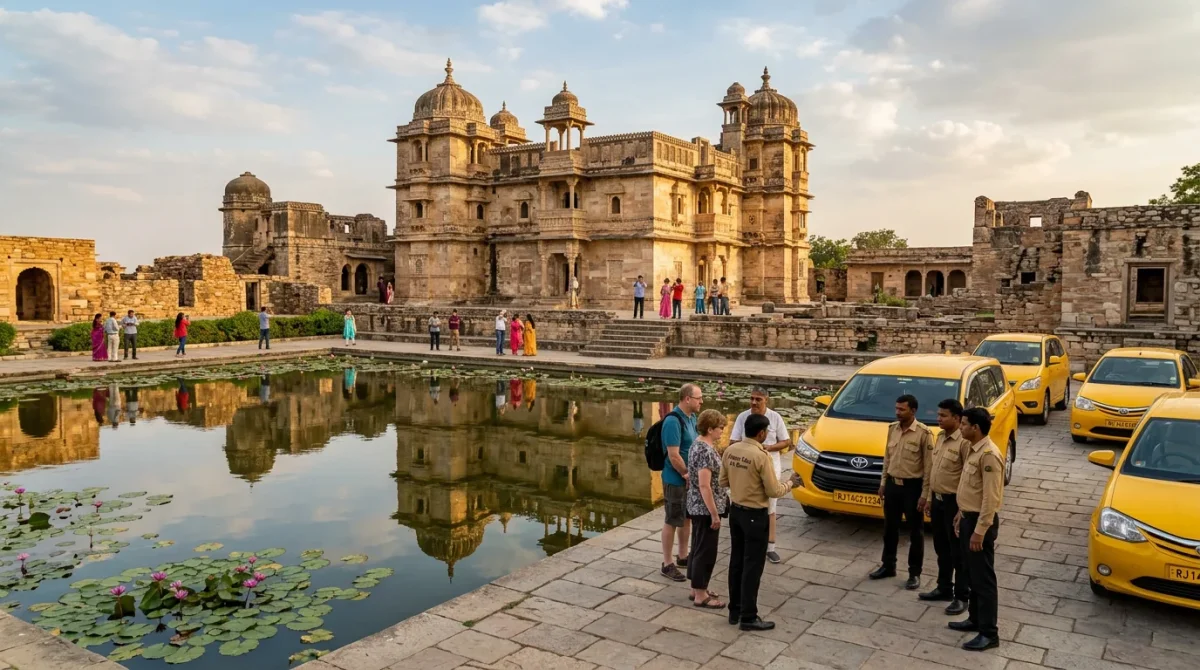
The Padmini Palace — or more accurately, the pavilion from which Alauddin Khilji is said to have glimpsed Rani Padmini's reflection in a water mirror — stands on a small island in a lotus pond near the southern end of the fort. The story of Alauddin Khilji's obsession with Rani Padmini's beauty, his siege of Chittorgarh to possess her, and her eventual jauhar has been immortalized in literature, poetry, and film (most recently in the controversial but spectacular 2018 Bollywood epic "Padmaavat"). Whether or not the historical details are precisely accurate, the Padmini Palace remains one of the most evocative sites in Rajasthan — its reflection shimmering in the pond as the surrounding hills create a hauntingly beautiful backdrop.
The Meera Temple is dedicated to the legendary poet-saint Meerabai, who was born into the Rajput royal family and is one of the most celebrated devotional poets in Indian history. Her bhajans (devotional songs) dedicated to Lord Krishna remain popular throughout India after 500 years. The temple is built in the Indo-Aryan style and stands adjacent to the larger Kumbha Shyam Temple (dedicated to Vishnu), which dates from the 15th century and has remarkable carved friezes depicting scenes from the Mahabharata.
The Gaumukh Reservoir is a natural spring and sacred tank near the northern end of the fort, fed by a natural spring that flows through a stone cow's mouth (gau = cow, mukh = mouth). It was the fort's primary freshwater source through the centuries of siege and battle. The water is considered sacred and devotees take ritual dips. Nearby, the cluster of Jain temples built in the 15th century includes the beautifully carved Shantinath and Adinath temples with their distinctive ornamental towers.
6:00 AM: Depart Jaipur. Drive via NH-48 and NH-58 to Chittorgarh (~4.5 hours).
10:30 AM: Begin fort exploration — Vijay Stambha, Kirti Stambha, Meera Temple.
1:00 PM: Lunch at a restaurant near the fort entrance.
2:00 PM: Continue — Rana Kumbha Palace ruins, Padmini Palace, Gaumukh Reservoir.
4:30 PM: Depart Chittorgarh for Jaipur (arriving ~9 PM) or continue to Udaipur (112 km, 1.5 hours) for overnight stay.
Walk through India's greatest fort and the legends of Rajput honor. Book today.
Trusted by Leading Organizations & Valued Clients