
Call Us+91 82090 86201
WhatsApp+91 82090 86201
India's most iconic tourist circuit — Delhi, Agra & Jaipur. Taj Mahal, Red Fort, Amber Fort. Unforgettable history in 4–5 days.
The Golden Triangle is India's most visited tourist circuit, connecting three of the country's most magnificent cities — Delhi, Agra, and Jaipur — in a triangular route that covers approximately 720 kilometers. This circuit offers travelers an extraordinary concentration of UNESCO World Heritage Sites, Mughal architecture, Rajput palaces, vibrant bazaars, and rich cultural experiences within a compact geographic area.
Starting from Jaipur, our Golden Triangle tour by private taxi gives you the freedom to explore each city at your own pace, stopping at attractions that interest you and skipping the ones that don't. Unlike group tours with fixed schedules and rushed timelines, our private taxi tour puts you in complete control of your India experience.
The tour begins (or ends) in Jaipur, the magnificent capital of Rajasthan and the only planned city of medieval India. Founded in 1727 by Maharaja Sawai Jai Singh II, Jaipur was built according to ancient Vastu Shastra principles and painted in the distinctive terracotta pink that gives the city its nickname.
Amber Fort: The crown jewel of Jaipur, this 16th-century hilltop fortress offers stunning examples of Hindu and Mughal architecture, including the dazzling Sheesh Mahal (Mirror Palace) whose ceiling reflects a thousand candlelit flames. Ride an elephant up to the main gate or take the jeep ride for a faster ascent.
Hawa Mahal: The five-story "Palace of Winds" with its 953 intricately carved windows was built in 1799 to allow royal women to observe street processions without being seen. Its honeycomb facade is one of the most photographed buildings in India.
City Palace: Still home to the royal family of Jaipur, the City Palace complex houses remarkable museums of royal artifacts, textiles, and weapons. The two enormous silver urns (world's largest silver objects) used to carry Ganges water to England by Maharaja Madho Singh II are a highlight.
Jantar Mantar: A UNESCO World Heritage Site, this 18th-century astronomical observatory contains 19 architectural astronomical instruments, including the world's largest stone sundial that can measure time to an accuracy of two seconds.
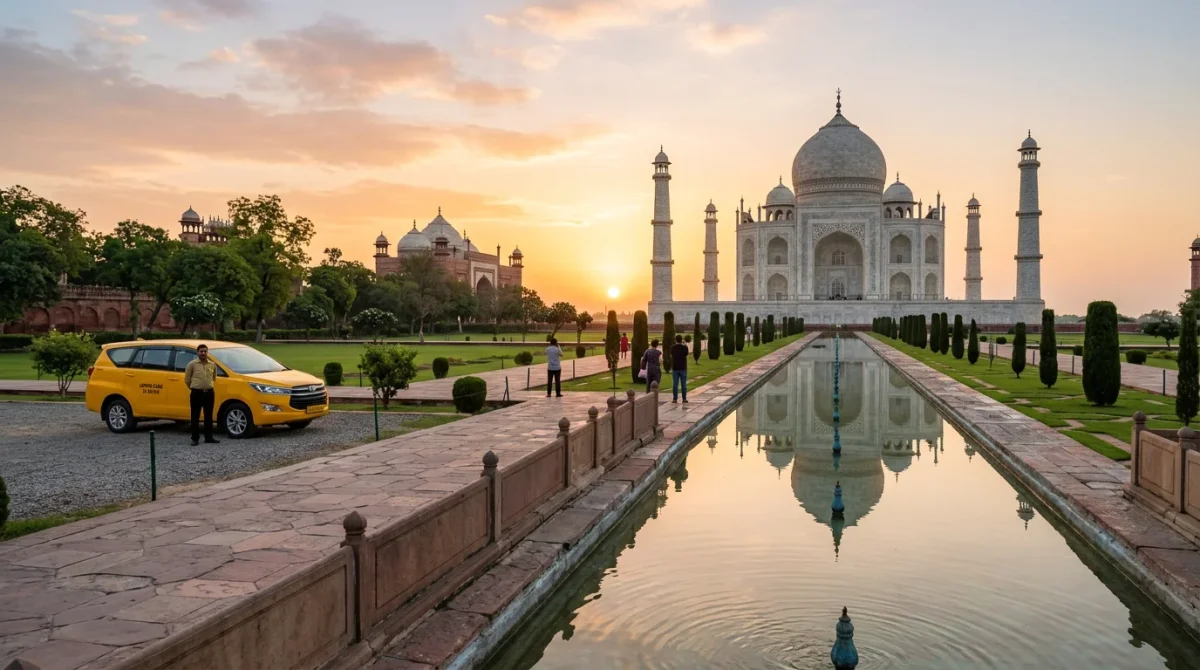
Taj Mahal: No description does justice to this sublime monument. Built by Emperor Shah Jahan as a tribute to his beloved wife Mumtaz Mahal, the Taj Mahal is considered the finest example of Mughal architecture and is universally regarded as the world's most beautiful building. Visit at sunrise for the most magical experience — the white marble changes color from pale pink to brilliant white as the sun rises.
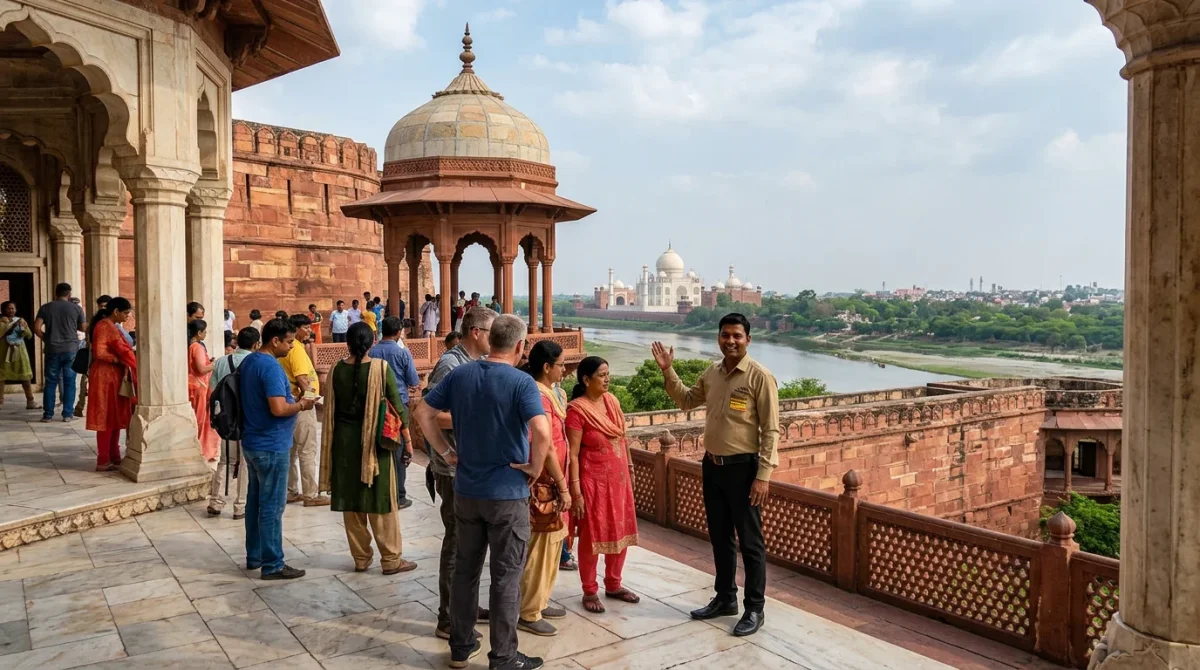
Agra Fort: A short drive from the Taj, this UNESCO-listed red sandstone fortress served as the main residence of the Mughal emperors until 1638. Its massive walls enclose palaces, halls of audience, mosques, and the poignant Musamman Burj — the tower where Shah Jahan spent the last eight years of his life under house arrest, gazing at the Taj Mahal.
Fatehpur Sikri: A 45-minute drive from Agra, this perfectly preserved ghost city was the Mughal capital for just 14 years before being abandoned, possibly due to water shortage. The Buland Darwaza (Gate of Magnificence) at 54 meters is one of the tallest gateways in the world.
Mehtab Bagh: For the best sunset view of the Taj Mahal from across the Yamuna River, a visit to this octagonal garden on the opposite bank is essential for photographers.
Red Fort: The iconic 17th-century Mughal fortress on the banks of the Yamuna river is where India's Prime Minister addresses the nation on Independence Day. Its massive red sandstone walls and ornate marble palaces represent the pinnacle of Mughal power and artistry.
Qutub Minar: India's tallest minaret (72.5 meters) and a UNESCO World Heritage Site, this soaring victory tower was built in 1193 and is surrounded by Delhi's earliest mosque and an iron pillar that has never rusted despite standing for 1,600 years.
Humayun's Tomb: The garden tomb of the Mughal Emperor Humayun, this stunning monument was the first mature example of Mughal architecture in India and directly inspired the design of the Taj Mahal a century later.
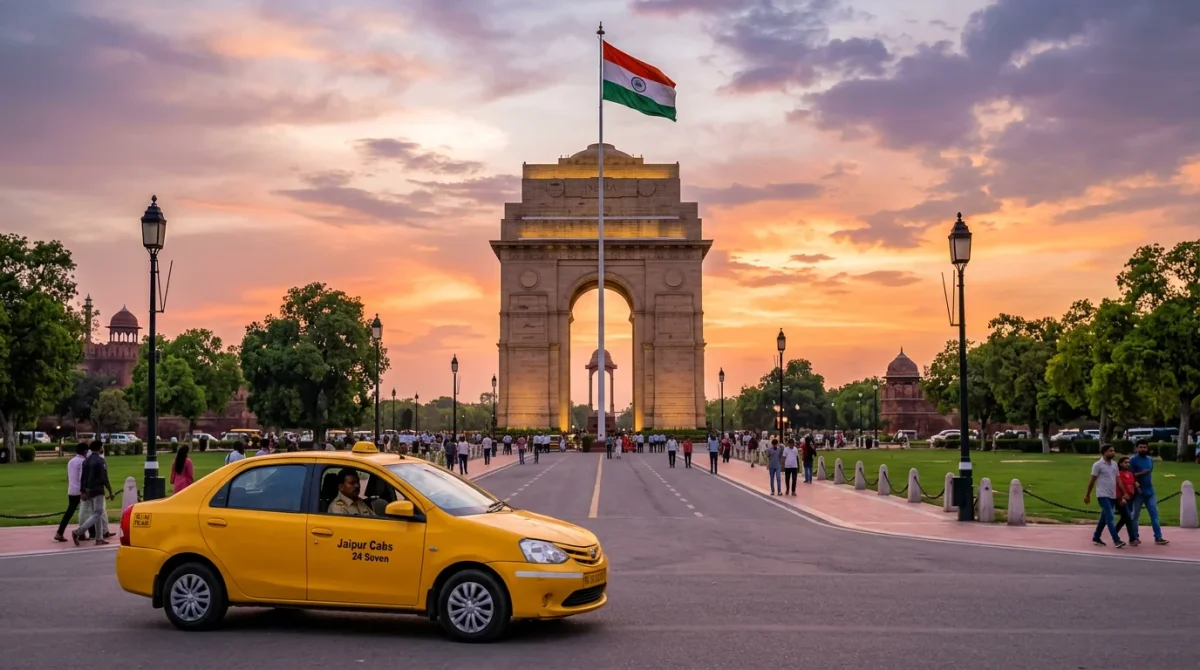
India Gate: The 42-meter war memorial arch commemorating 70,000 Indian soldiers who died in World War I is surrounded by parkland and is especially spectacular at night when lit up against the dark sky.
Day 1 — Jaipur: Amber Fort, City Palace, Jantar Mantar, Hawa Mahal exterior. Drive to Agra (4 hours).
Day 2 — Agra: Taj Mahal at sunrise, Agra Fort, Fatehpur Sikri. Drive to Delhi (3 hours).
Day 3 — Delhi: Red Fort, Jama Masjid, Qutub Minar, Humayun's Tomb, India Gate, Connaught Place. Return to Jaipur (4.5 hours) or fly from Delhi.
Extended 5-day version adds more time in Jaipur (local markets, Nahargarh Fort) and Delhi (Lodi Garden, Hauz Khas Village, Old Delhi food tour).
Discover India's finest heritage in one unforgettable journey. Book with Jaipur Cabs 24Seven.
Trusted by Leading Organizations & Valued Clients