
Call Us+91 82090 86201
WhatsApp+91 82090 86201
Seek the blessings of Lord Hanuman at the revered Salasar Balaji temple. 185 km from Jaipur. Daily departures available.
Salasar Balaji is one of the most important pilgrimage sites in Rajasthan, located in the Salasar village of Churu district, approximately 185 km from Jaipur. The temple is dedicated to Lord Hanuman and is remarkable because the idol here depicts Hanuman with a beard and moustache — an extremely rare and unique form that is not found elsewhere in India. This distinctive form of Hanuman is believed to fulfill the sincere prayers of devotees with extraordinary speed, which is why Salasar is one of the most visited temples in North India.
The Salasar Balaji temple draws millions of pilgrims every year from Rajasthan, Haryana, Punjab, Delhi, and across India. The temple is particularly busy on Saturdays (considered the most auspicious day for Hanuman worship), on Hanuman Jayanti (April/May), and during the Chaitra and Ashwin Navratra periods. The atmosphere during these peak times is electric — the air fills with the sound of devotional bhajans, the fragrance of incense and flowers, and the collective energy of thousands of devoted pilgrims.
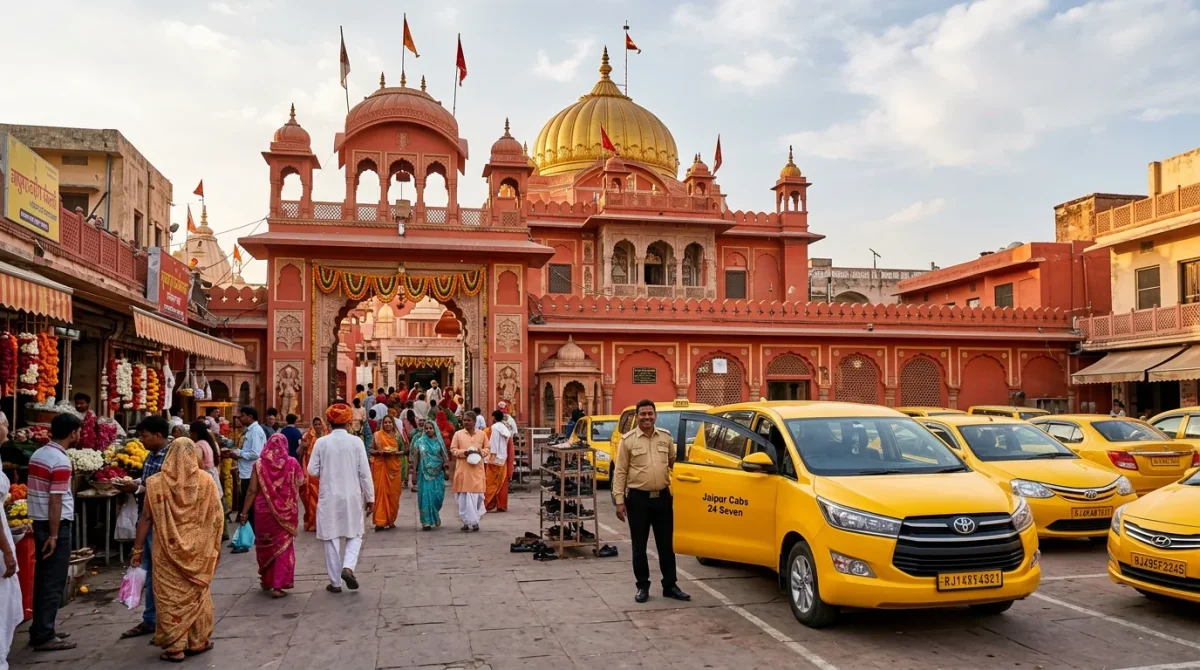
The origin of the Salasar Balaji idol is wrapped in a miraculous legend. In 1754, a farmer in Asota village (near Nagaur) was ploughing his field when his plough struck a stone that began to bleed. The farmer dug up the stone and found a divinely beautiful idol of Lord Hanuman. That same night, the saint Mohandas Ji — who lived in Salasar — had a dream in which Lord Hanuman appeared and directed him to receive the idol.
The idol was transported from Asota to Salasar in a cart and the temple was constructed at the spot where the cart stopped on its own. The saint Mohandas Ji consecrated the idol and served the deity for many years. His samadhi (memorial) is within the temple complex, and he is venerated alongside Lord Hanuman by pilgrims to this day. The miraculous origins and the fulfillment of countless devotees' prayers over centuries have made Salasar one of the most powerful pilgrimage destinations in Rajasthan.
The Salasar Balaji temple complex is a large, well-maintained facility that can accommodate thousands of pilgrims simultaneously. The main temple building is several stories high, with the inner sanctum housing the unique bearded idol of Lord Hanuman adorned with a beautiful crown, jewels, and fresh flower garlands. The idol is painted in red sindoor (vermilion), following the Hanuman tradition of anointing with sindoor as a symbol of devotion.
Within the complex, there is a large dharamshala (pilgrim rest house) for overnight stays, multiple food stalls and langar (community kitchen) facilities, a prasad counter offering the temple's famous motichur laddoo (considered as blessed prasad), and several smaller shrines to Ganesh Ji, Shiva Ji, and other deities. The complex is meticulously clean and well-organized, with separate entry and exit queues managed efficiently by temple volunteers.
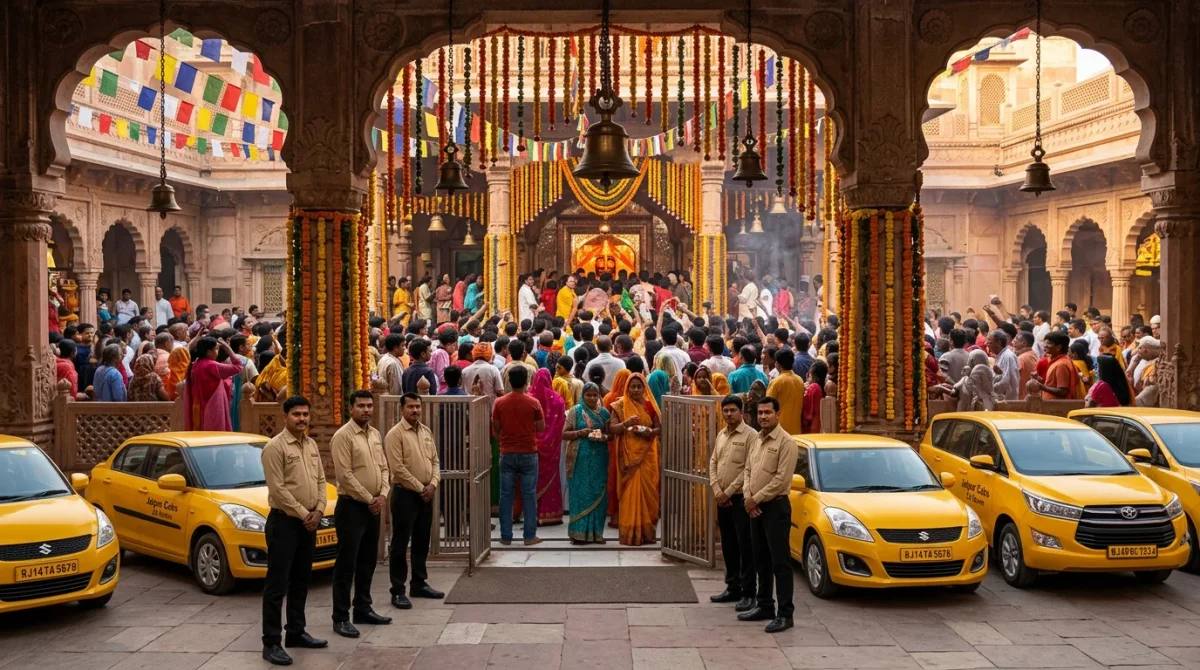
Since both Salasar Balaji (185 km from Jaipur) and Khatushyam Ji (170 km from Jaipur) are located in the Shekhawati region and are approximately 85 km apart from each other, many pilgrims choose to visit both on a 2-day tour. Day 1 covers Khatushyam Ji darshan and an overnight stay in Sikar or Ringas. Day 2 proceeds to Salasar Balaji for morning darshan before returning to Jaipur. This 2-day spiritual circuit is one of our most popular tour packages and is available at a special combined rate.
Alternatively, the single-day Salasar Balaji tour departs Jaipur at 5 AM, arrives at the temple by 7:30–8 AM for the morning darshan, allows 2–3 hours at the temple, stops for lunch at a quality restaurant in Churu or Sikar, and returns to Jaipur by 5–6 PM. The total round trip distance is approximately 370 km.
The drive from Jaipur to Salasar passes through the Shekhawati region — a fascinating area known as the "open-air art gallery of Rajasthan." Towns like Sikar, Lachhmangarh, Fatehpur, and Mandawa are famous for their beautifully painted havelis (merchant mansions) decorated with intricate frescoes depicting mythological scenes, historical events, and everyday life. If time permits, a brief stop in Sikar or Lachhmangarh to admire the painted havelis adds a wonderful cultural dimension to the spiritual pilgrimage.
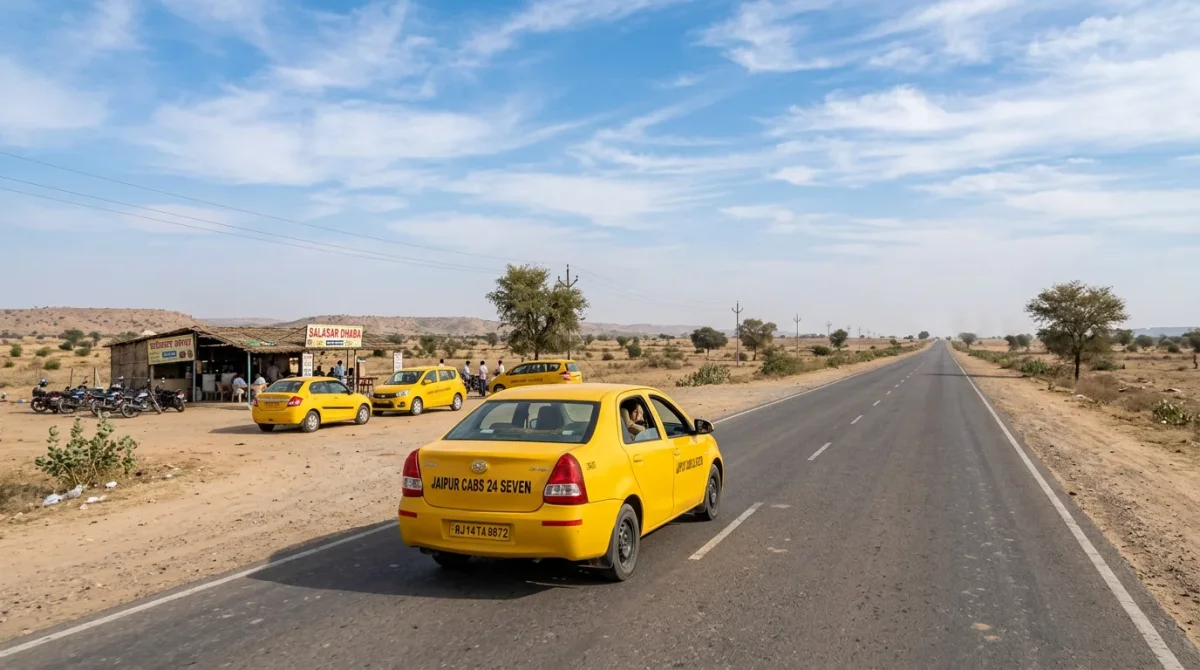
The temple is open from 4 AM to 12 PM (morning session) and 4 PM to 10 PM (evening session). The Mangala Aarti at 4 AM and the Shayan Aarti at 9:30 PM are the most spiritually significant ceremonies. Prasad (motichur laddoos and saffron-scented rice) can be purchased from authorized temple counters — avoid unauthorized sellers outside the complex. Footwear lockers are available. Simple, modest clothing is appropriate; saffron or red attire is considered auspicious. Our driver will be familiar with the parking arrangements and temple timings to maximize your darshan experience.
Hassle-free darshan trip from Jaipur with comfortable AC taxi. Book now.
Trusted by Leading Organizations & Valued Clients